Rewarding Your Kids for Eating Doesn’t Work. What Does?
Without even realizing it, we may now be passing down these same messages as we learn to parent our own kids.
The problem with food-related reinforcement, as true today as it was back then, is that it doesn’t work! In fact, rewarding our kids for eating often achieves the very opposite of what we intend. It tends to make picky eaters more resistant to new foods and muddies the message of positivity, encouragement, and confidence that we hope to establish as they grow up and grow into their own eating habits.
As a registered dietitian, my clinical practice with early childhood nutrition has shown me time and time again that rewarding kids for eating (or “bribing” them, you might say) just doesn’t work. Here’s why.
6 Reasons to Avoid Bribing Your Kids at Mealtime
1. It Prevents Kids From Learning to Listen to Their Bodies.
The most important reason not to give rewards to picky eaters for eating is that it can prevent them from understanding their own hunger and fullness cues. Instead of learning to listen to their bodies to determine whether they’re hungry or full, kids will begin to look to the external reward. The bigger the reward (maybe it’s a new toy, an extra 30 minutes of fun before bed, or a special dessert), the more motivated kids are to eat.
Even if our reward system for picky eaters focuses on encouraging only “healthy” foods, the pattern is pervasive. Once kids stop honoring their own hunger/fullness cues, all of their eating patterns may become confused, not just when veggies are on the table. The fewer kids who can hear what their body is telling them, the greater their risk for developing unhealthy eating patterns as they get older.
2. It’s a Slippery Slope.
To be an effective habit-forming tool, a reward must have clear terms: if your picky eater does this, then this results. Consistency is key, but it’s also very hard! We all want our kids to be happy, and once we’ve established the presence of mealtime rewards, it’s easy to start moving the goalposts little by little.
For example, maybe we start by saying that our kids will get 15 minutes of TV if they eat all the broccoli. As that begins to feel impossible, maybe we lower the bar to just four pieces of broccoli. Then, finally, maybe just one bite. In this case, our kids have learned that the rules are flexible and that they might get the reward anyway, even without eating the broccoli. Meals can then turn into a power struggle, and you don’t need me to tell you that iron-willed toddlers are very good at beating out tired parents!
3. It Can Muddle Relationships Between Feeder and Eater.
When you introduce rewards into eating, you aren’t just changing your child’s relationship with food; you’re changing your relationship with your child. As you instate a reward system, your child may start to view eating as an easy way to please you. This, in turn, shifts the focus away from teaching your child to listen to their body and towards a focus on gaining approval. The more they seek approval, the less they may naturally ask themselves, “Am I full? Does my body need to keep eating?”
4. It Increases Food Anxiety.
It’s natural for us as parents to want our kids to fulfill their potential, which includes a healthy, active body. But if we focus so much on an elaborate reward system (like one fun activity for every three veggies, or one sticker for every two bites), we may build up too much fixation on our picky eaters’ habits.
We may start rewarding kids whenever they eat anything at all, or we may turn ourselves into a short-order cook who makes whatever our kids want just to fill their stomachs. It becomes exhausting and may establish a sense of anxiety around meals (for both kid and parent!).
5. It Builds Food Resentment.
Opposite to giving rewards, withholding privileges (i.e., negative reinforcement) can also be troublesome for kids. Removing access to toys or limiting fun activities will further frustrate our kids, not only making them uncomfortable with the new or “yucky” food but also taking away their pastime, which will lead to more anger and disappointment.
Increased resentment around food is not a positive experience for the picky eater, nor is it ever going to make mealtime pleasurable. And as upset kids dig their heels in, the power struggles will only get worse.

6. It Becomes a Habit.
Learning to eat new foods can be a tricky time in infancy, for both the parent and the child. Some kids are quite accepting as infants but then begin to develop picky eating habits as a toddler, which can be equally frustrating and confusing. In both cases, rewarding children for eating often starts at a very early age. Once it becomes a habit, it’s very difficult to break, even as your child gets older, and even when we can see that the positive or negative reinforcement isn’t really working.
What to Do Instead: Keep Meals Relaxed and Reward-Free
If you’ve been rewarding your kids for eating, you aren’t alone! Many, many parents use this strategy, and you shouldn’t feel bad if the habit has made its way into your family’s mealtime routine. Taking small steps to remove the reinforcement from meals will go a long way to helping your kids develop a more positive relationship with food. It’s never too late to build new habits for your family (and you’ll be modeling a great example for your kids in the process!).
Here are a few simple ways to approach meals without resorting to positive or negative reinforcement.
1. Talk About the Food.
Positive reinforcement doesn’t have to be a shiny new toy; it can be as simple as verbal praise for “doing a good job” with food. It’s natural to want to highlight our kids’ positive behaviors, but too much praise may lead your child to listen more for your approval than their own hunger/fullness cues.
Rather than making a big commotion about food, it’s best to have a relaxed atmosphere. Instead of praising your child directly, try starting a laid-back conversation about the food. If your child tries a bite of broccoli, try a piece yourself and describe what it tastes like to you or what you think would be good alongside the broccoli the next time your child tastes it.
Instead of any kind of reinforcement (which can often feel like pressure), you’ll be encouraging a sense of wonder and discovery around food. If your child hates the food, ask why! Try to make it fun and give your little one space to say what’s icky and, more importantly, why.
2. It’s Okay to Make Meals Fun!
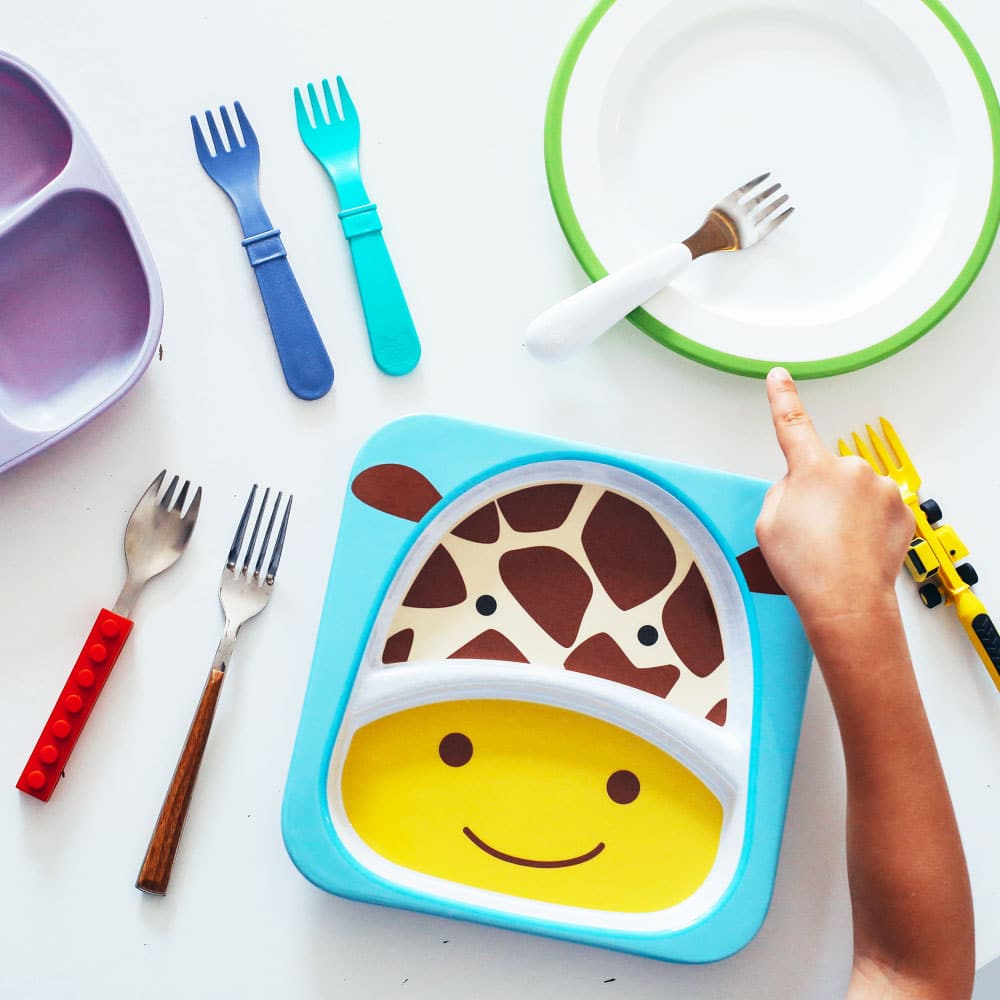
Even without direct rewards or verbal praise, you can still have fun while eating! Some of our favorite picky eater tools involve cute plates, fun character food picks, and adorable mealtime buddies that help kids explore the many colors, textures, tastes, smells, and other sensations of food.
The key is to spur some interest without resorting to gadgets that will overly distract your child from the experience of eating. Something simple like a board-game-themed dinner tray can take the focus off how many bites your child is eating (for you as the parent) or how “ewwww!” the broccoli smells (for your kid). If you order Nurture Life’s healthy kids’ meals, you can easily reuse our meal packages to add some whimsy and creativity to meals, too!
If you do use any kind of themed plates, table toys, or other game elements at meals, try to think of them first and foremost as a communication tool. Use them to ask questions, build an imaginative story, talk about different foods, and have fun together while breaking picky eating habits.
3. Experiment With Picky Eater Strategies.
Many parents resort to mealtime bribes to get their kids past a picky eating phase. If your little one is suddenly refusing to eat anything green, leafy, or non-chicken nugget, then you may want to try out some picky eater strategies. There are tons of ways to introduce new foods (or to reintroduce old foods to newly picky eaters) that don’t involve any kind of reward system for kids.
Here are a few helpful resources to get started:
- Trying one new food at a time, every other day
- Making your kitchen more kid-friendly
- Involving your child at mealtime
- Serving picky eater-approved veggies
Different strategies work for different kids, so it may take some time to find what works best for you. And research shows that it can take 6–15 times before a child accepts a new food, so patience and persistence are key. Even when it doesn’t feel like it’s working, remind yourself that you’re on the right track!
Starting at a young age, it’s important for children to learn to listen to their bodies, to eat when they are hungry, to stop when they are full, and to view food as energy that fuels them throughout the day. By moving away from food-related reinforcement and toward a more open, curious, and pressure-free approach to meals, you’ll be teaching your child how to nourish their body now and for a lifetime.
If you have any questions about building healthy, independent eating habits for your kids, please reach out to me and Nurture Life’s other child nutrition experts at nutrition@nurturelife.com
FAQ
Does rewarding picky eaters help them try new foods?
Rewarding picky eaters rarely leads to better results. Many kids may taste new foods once to get the reward, but the habit does not last. Rewards shift the focus away from healthy eating habits and make it harder for a child to learn what their body likes. Young children need calm, pressure-free exposure so they can explore a variety of foods at their own pace.
How can I reduce picky eating without using rewards?
You can reduce picky eating by keeping meals relaxed and offering new foods in tiny portions without pressure. When a child eats because they are curious instead of trying to earn something, the experience becomes more positive. It also helps to talk about what your child likes, model tasting foods yourself, and encourage parents to create routines that support steady, predictable meals.
How often should I introduce new foods to a picky eater?
For picky eaters, gentle repetition is important. Offering new foods several times a week helps young children build comfort through familiarity. Research shows it can take many exposures before a child accepts something new, especially during an extreme picky eating phase. Staying neutral and patient gives your child room to learn what their body needs.
Can involving kids in meal prep help reduce picky eating?
Yes. When you involve kids in simple food prep tasks, they feel more connected to the meal. This hands-on approach encourages adventurous eating and makes new foods seem less intimidating. Even stirring, washing veggies, or choosing a color for the plate can support your child’s development and help them feel proud of the food they helped make.
How do non-food rewards affect picky eaters?
Non-food rewards still create pressure and often increase picky eating. When a child eats to earn a prize, they are not learning to enjoy healthy food or exploring a variety of foods based on hunger. Many kids start to ignore their internal cues, which makes long-term progress much harder.
Can encouraging adventurous eating support my child’s development?
Yes. Adventurous eating supports sensory skills, confidence, and independence. When a child tries new foods without pressure, they learn to understand their own food intake and discover what their body needs. This process plays an important role in your child’s development and helps build habits that help with picky eating.
How can I improve food intake without pushing picky eating habits?
You can support food intake by offering balanced meals with a small variety of foods, keeping portions small, and avoiding pressure when your child eats or refuses something. Gentle structure, simple meal planning, and modeling your own interest in food all help picky eaters. Families who use Nurture Life meals often appreciate the consistency this provides, especially when picky eating is challenging.
How can structured routines help picky eaters feel more comfortable at mealtime?
Structured routines give picky eaters a sense of predictability, which reduces stress and helps them explore food at their own pace. When a child eats within a calm pattern of regular meals and snacks, they learn what to expect and feel safer trying something new. Simple meal planning, offering balanced options, and keeping portions small can make the experience easier for children. Families who use Nurture Life meals often appreciate how the consistency supports relaxed eating and encourages kids to eat without pressure.
Can Nurture Life meals help children explore new foods more easily?
Yes. Nurture Life meals offer balanced, kid-friendly options that make it easier for children to taste and eat a wider range of food without pressure. The consistent flavors and textures help kids feel comfortable while building confidence around eating.