To a toddler, the world can be a pretty overwhelming place. Whether they’re learning new words or mastering motor skills, every day is filled with new possibilities and opportunities for growth. It’s certainly an exciting time, but it can also feel a little scary for both toddler and parent!

Though there’s no guarantee that things will always go perfectly as planned, setting a daily toddler schedule for your child can help them feel safe and secure, which can keep their emotions (and meltdowns) in check. For example, if your little one knows to expect a healthy snack at a certain time of day, they’ll likely develop the patience to wait until snack time rather than become fussy the instant they feel hungry.
Toddler schedules and routines can also guide parts of the day that are sometimes problematic, such as bedtime. If your child knows that certain activities (cleaning up toys or brushing teeth, for example) cue the beginning of bedtime, they’ll have more time to adjust to the idea of going to sleep. Getting a handle on each day’s activities can also boost your toddler’s confidence. When they can predict what’s ahead, they’ll likely feel more sure of themselves, which will help them be more open to trying new things.
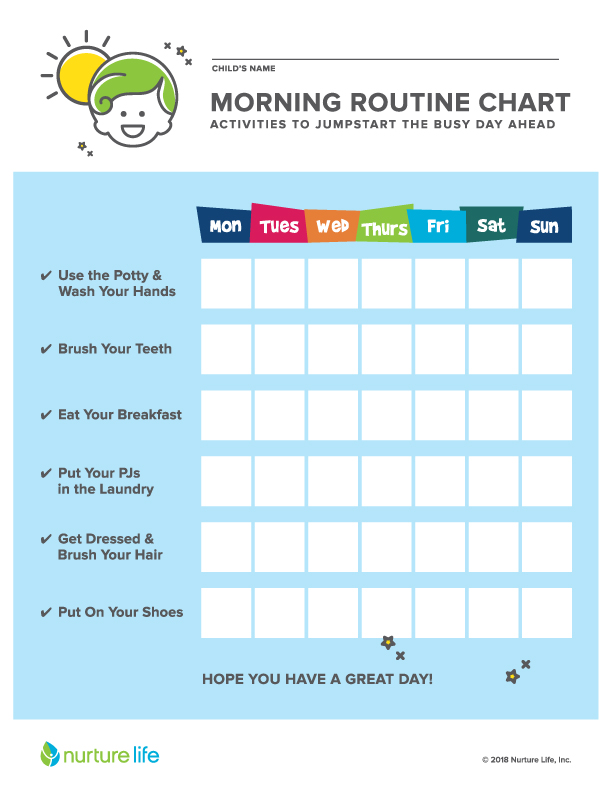
Not sure where to begin in devising a daily toddler schedule? Try a routine chart for toddlers. A toddler routine chart is a fun way to get your little ones actively involved in their schedule. It can also be a helpful tool to frame their day. Get a kid-friendly routine chart that is simple enough for them to understand, and fill it out together throughout the day. Once you have your toddler routine chart, try these nine tips to round out your toddler’s schedule.
Tips to Build a Toddler Schedule
1. Kickstart Your Toddler’s Day with Morning & Evening Routines
The beginning and end of the day are often the most challenging times, simply because there’s a lot to do, from getting ready for preschool to taking a bath before bed. Focus on mastering your toddler’s morning and evening routine first, since these will help the rest of the day go well.
2. Shape Your Toddler’s Schedule by Following Their Natural Cues
Is there a specific time when your child prefers playing? Reading? Napping? Shape your routine based on your toddler’s behavior. Their schedule will feel more natural to them, and you’ll likely have a better chance of sticking to the plan.
3. Keep Consistent Wake-Up and Bedtimes for Toddlers
Though it might be tempting to let your child sleep in on the days they want to, try to stick to the same wake-up time and bedtime each day. A uniform sleep schedule keeps daily naptime regular, which will facilitate a smoother day for you and your child. Generally, toddlers should wake up between 6 and 8 am, and they should go to bed between 7 and 8:30 pm.
4. Why Naptime is the Secret to a Happy Toddler
As if you would! Naps are critical for a toddler’s growth and overall well-being. If the length of your child’s naps seems to vary greatly, aim to create consistency. Remember this general rule of thumb: Toddlers should get about 12-14 hours of sleep, including an afternoon nap that lasts 1-3 hours. Younger toddlers might take two naps a day, but be careful not to schedule the second one too close to bedtime.
5. The Value of Quiet Time in Your Toddler’s Daily Routine
When planning a routine, you may find it tempting to fill every minute with an activity. Remember to pencil in quiet time to give your toddler (and you) a break. This time doesn’t have to be boring, either. Try coloring books, a toddler-level puzzle, or a board book they can flip through on their own.
6. How Consistent Mealtimes Can Improve Your Toddler’s Eating Habits
Just like their sleep schedule, toddlers thrive when mealtime and snack time are consistent. They should eat three balanced meals each day (focus on vegetables, healthy grains, and lean proteins) and maybe 1 or 2 snacks. Start your toddler’s morning with a balanced breakfast served at the same time and place to make eating a regular ritual. Consistent mealtimes and snacks help toddlers establish a positive relationship with food, which leads to healthy eating habits.
7. How to Communicate a Daily Routine to Your Toddler
Instead of suddenly starting a new routine and expecting your toddler to go along with it, spend some time discussing each part of your day. See if your child has any questions, and make sure they understand their routine before putting it into play.
8. Incorporate Variety Without Breaking Your Toddler’s Routine
The beauty of a routine is that it’s predictable and reliable, but that doesn’t mean there’s no wiggle room. When creating your toddler’s routine, use broad categories that allow you to change things up. Instead of scheduling “reading time,” for example, schedule “activity time,” which could mean reading, drawing, outside time, or something else.
9. Adapting Your Toddler’s Schedule to Changes
Inevitably, things will come up that will potentially disrupt your routine. It could be overnight guests, a vacation, a stomach bug, or just a day your child is in a bad mood. Things happen, and your best plan of action is to be flexible. Stick to the routine as best you can, but don’t force anything. You’ll be able to return to your regular plan soon enough, so don’t worry about bumps in the road.
Sample Toddler Schedule
Every toddler’s schedule will look a little different, but a clear plan can help guide your toddler’s day. Below is a sample toddler schedule that balances free play, quiet time, and essential activities like naps and meals.
- Wake time 7:00 am: A calm morning routine sets the tone for the day.
- Active play: 8:30 am: Outdoor or physical activity to burn energy and build motor skills.
- Snack & lunch: A Consistent mealtime routine helps most toddlers feel secure.
- Nap time 12:30 pm: One nap supports total sleep needs.
- Quiet activities 3:00 pm: Coloring, puzzles, or books can help your little one play independently.
- Bedtime routine: 7:00 pm: A warm bath and storytime ease bedtime battles and help kids fall asleep more easily.
Even small changes can make a big difference. For example, adding short periods of calm play before bed can reduce night restlessness and set up a good bedtime routine.
Home Mom Schedule Tips
For stay-at-home moms, creating a rhythm that works for the whole family is key. While every one-year-old child has unique needs, a great toddler schedule can make the day run more smoothly.
- Incorporate independent play blocks to encourage creativity.
- Balance structured learning with free play so kids don’t feel overwhelmed.
- Schedule breaks for yourself, even short moments, to help you avoid stress.
- Toddlers thrive on predictability, so keeping napping and meal routines consistent can ease transitions.
- If you’re in the same boat as other parents, sharing ideas can make daily planning feel a bit easier.
Many parents find that once a pattern is established, most toddlers naturally adjust, making the day calmer and less chaotic.
Importance of Consistent Routine
A consistent routine provides comfort, structure, and confidence for your child. It supports emotional development, reduces bedtime battles, and gives everyone a sense of stability.
- Predictable active play help children regulate energy levels.
- Regular nap time and mealtime routine encourage healthy habits.
- Clear patterns make it easier for children to fall asleep and wake up on time, improving their total sleep quality.
- Building in screen time limits can help both older kids and toddlers stay concentrated and calm.
Even if life with a toddler gets messy, a good routine acts like a safety net. The goal of a toddler schedule isn’t perfection, but predictability, and that’s something both kids and parents benefit from.
Why a Consistent Toddler Schedule Makes Life Easier for Everyone
Setting a toddler schedule is one of the best ways to ensure a rested, engaged, happy child. Your toddler will feel secure in their routine, and this will help them feel comfortable exploring and learning about the world around them. A little predictability can go a long way!
FAQ
How can I create a calming bedtime routine for my toddler?
A calming bedtime routine helps your kid relax and prepare for sleep. Start by dimming the lights, reading a story, or playing soft music. If bedtime runs a bit longer than planned or your kid has a hard time settling down, keep things consistent and avoid overstimulation. Talk softly and give them time to unwind. A predictable routine will help them feel confident about what comes next.
What are some fun and educational free play ideas for toddlers?
Play gives kids room to explore, learn, and grow. Activities like building with blocks, pretend cooking, or sensory play are easy ways to keep them engaged. Many toddlers love open-ended toys that let them use their imagination. If your kid is still a baby, choose simple and safe toys that match their age. Remember to watch how they interact during playtime to support learning through exploration.
How can stay-at-home parents structure their toddlers’ daily schedule effectively?
A flexible but consistent toddler schedule makes the day smoother for both parents and kids. A sample toddler schedule with set mealtimes and play blocks helps create balance. As a stay-at-home mom or dad, talk with your kid about daily activities to help them build confidence. Sticking to the general flow can reduce stress and make it easier not to forget key parts of the day.
How much physical activity should a toddler get each day?
Toddlers love to move, so aim for at least 60 minutes of play daily. This can include dancing, playing outside, or a walk to the park. Staying active supports healthy growth and can even help with disease control by boosting overall well-being. If your kid is still a baby, adjust the activity level.
What is a good daily schedule for a 2-year-old?
A sample toddler schedule for a 2-year-old usually includes a set bedtime routine, mealtimes, active play, and quiet periods. At this age, a structured day helps kids feel confident and secure. Keep in mind that some parts of the day might take a bit longer than expected. Sound familiar? That’s completely normal. A steady toddler schedule helps prevent chaos while leaving room for flexibility.
How to schedule independent play?
To schedule play, choose a time when your kid is well-rested and fed. Start with short blocks and gradually increase. Watch what activities keep their attention best, and make sure toys are appropriate for their age. Even baby steps toward independence can help them thrive. Independent play also gives parents a moment to regroup and stay on track with the toddler schedule.